-

Annotating Container Images During Promotion from Quarantine to Improve Auditing
A few weeks ago I wrote about how to use an intermediate quarantine registry for validating images and how to implement an approval workflow for images that don’t pass your security policies. In this post, I will describe how you can use OCI annotations and referrers to improve the auditing capabilities when you promote images…
-

Enriching Container Images with OCI Annotations for Supply Chain Security and Vulnerability Management
Annotations have been part of the Open Container Initiative (OCI) specification since version 1.0.0 dating back to 2017. However, their more extensive use saw uptick only recently – mainly with the proliferation of certified and hardened images and the increased need for supply chain security and vulnerability management. OCI annotations allow you to enrich the…
-
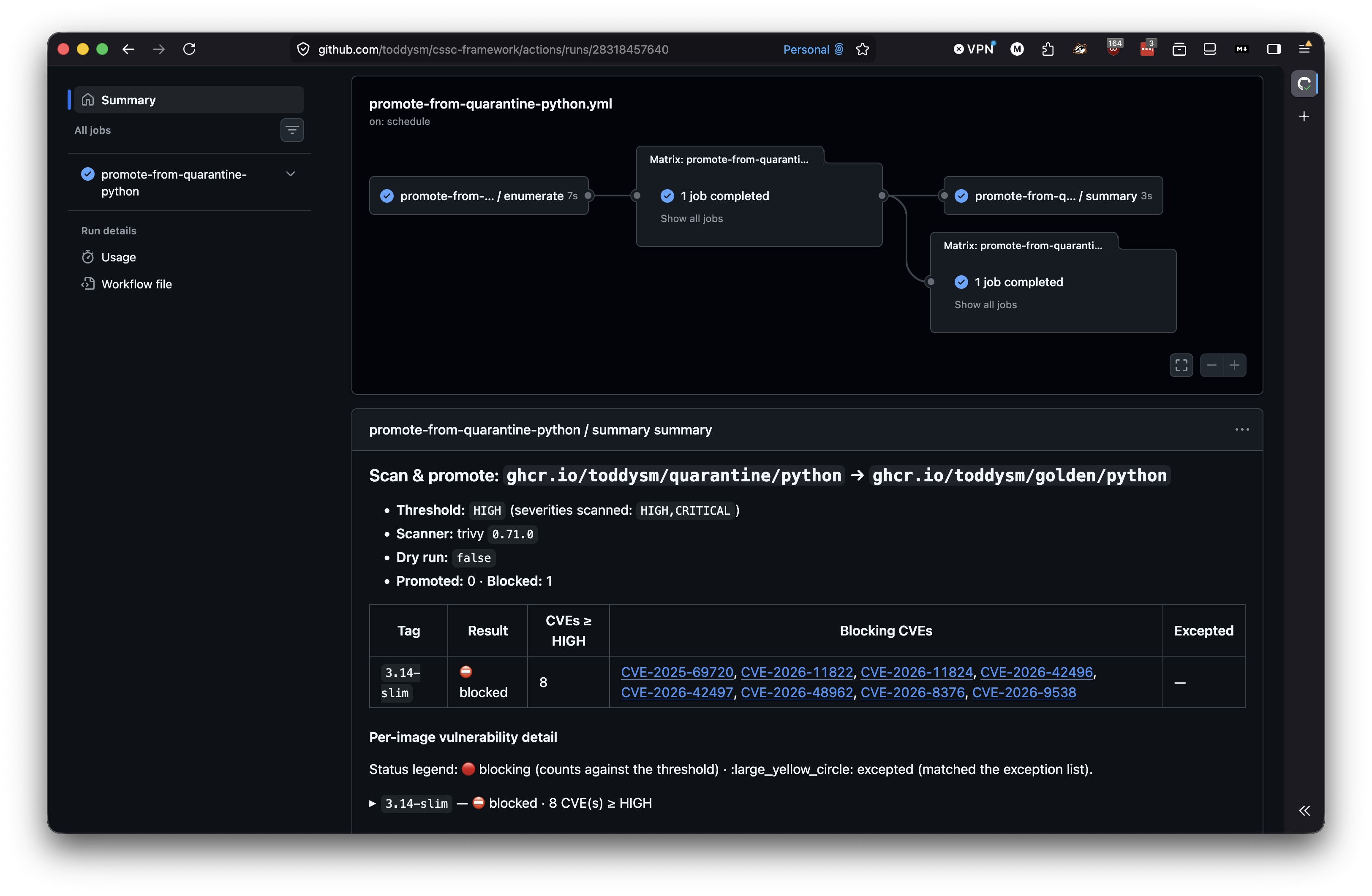
Implementing Approval Workflow for Promoting Quarantined Container Images
In previous posts I described how you can implement a GitHub actions to mirror and quarantine images from Docker Hub, promote images from quarantine to golden registry if they meet the vulnerability threshold as well as how to break down the monolithic GitHub actions implementation into reusable components. However, the biggest problem with this approach…
-

Re-disigning the Monolithic GitHub Workflow for Promoting Images from Quarantine
Yesterday I posted about Promoting Container Images from Quarantine Using GitHub Actions describing a simple way to do a Trivy vulnerability scan and promote the image if it passes the vulnerability threshold. However, the problem with that workflow was that it was too monolithic. While the monolithic workflow does the work, I wanted to have a…
-
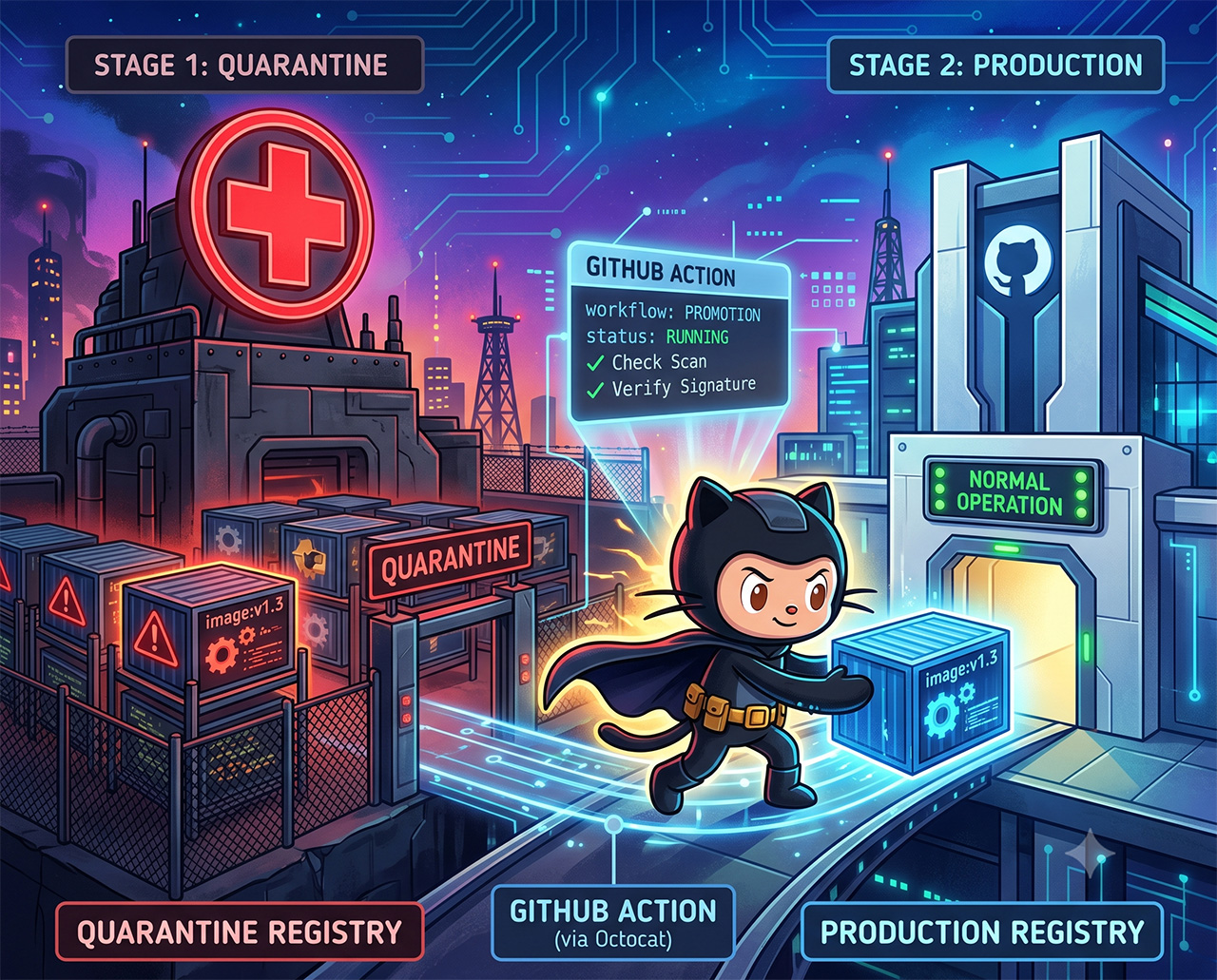
Promoting Container Images from Quarantine Using GitHub Actions
A few days ago, I posted about Mirroring Container Images from Public Registries Using GitHub Actions, which is one of the first thing you need to think about when securing the supply chain for containers and cloud-native artifacts. The next step is to validate those artifacts before promoting them for internal use. As explained in that…
-

Mirroring Container Images from Public Registries Using GitHub Actions
While working on my vibe coding project to implement containers’ supply chain workflows system, I decided to also replicate the experience that many enterprises currently have and implement the workflows using traditional CI/CD tools. As part of that I will also walk through the common scenarios for containers’ supply chain security. One of the common…
-
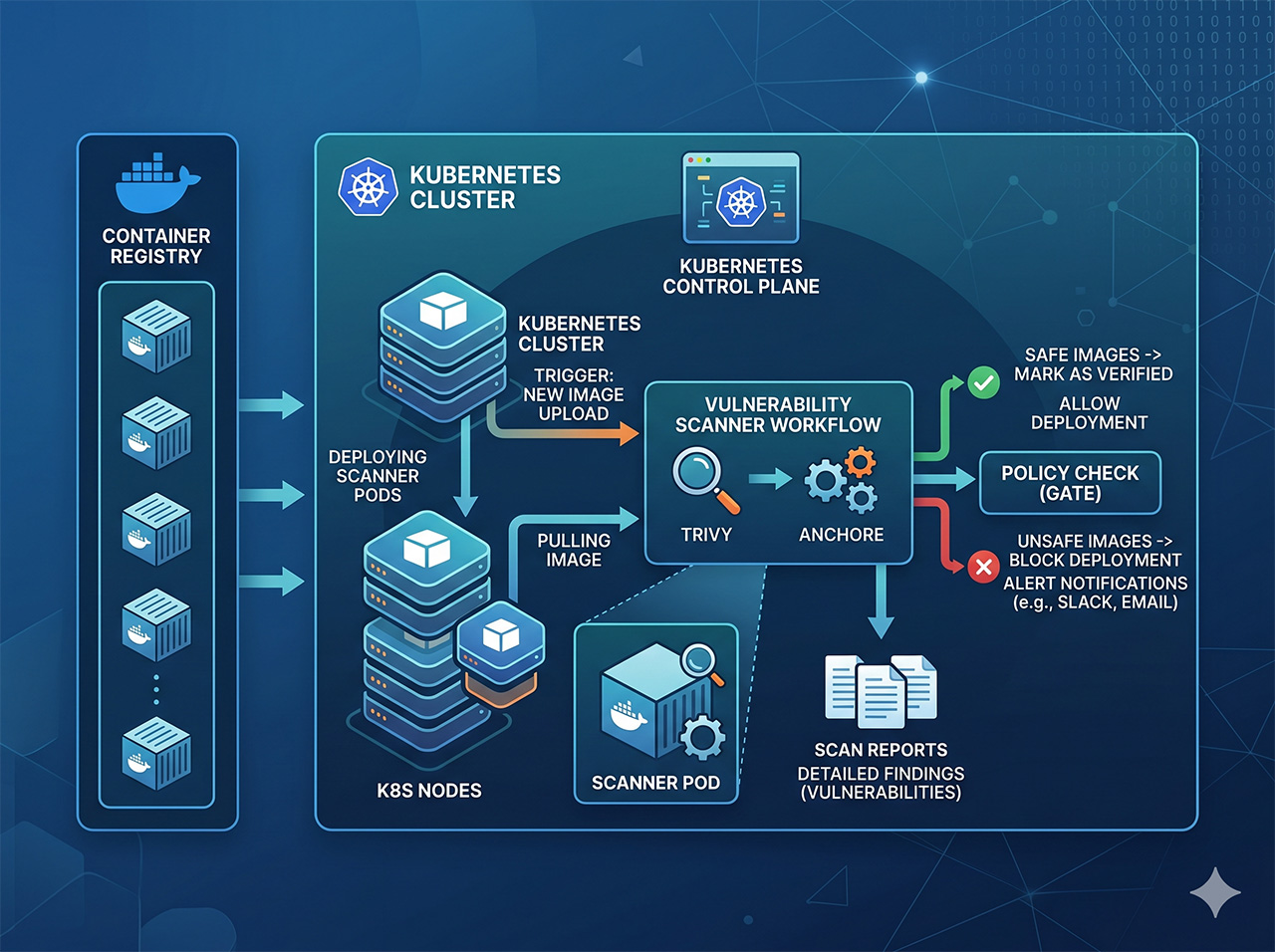
Why Supply Chain Security Belongs in Your Registry, Not Your CI/CD?
For the past five years, I’ve worked on supply chain security for containers and cloud-native workloads, and I’ve had the same conversation with security-conscious enterprises over and over. They don’t want their developers – or, now, their AI agents – pulling insecure images directly from public registries. Over those conversations, several clear patterns for securing the…
-

If I was the PM of… EvGateway
A while back a colleague of mine suggested that I start a series about the day of a product manager (or PM). Unfortunately, more often than we wish for our days as PMs are not too exciting to write about because they are full of long meetings, email exchanges, status updates, and unnecessary negotiations. Though,…
-

Authenticating with OCI Registries – GitHub Container Registry (GHCR) Implementation
Update 2024-03-04: Below, I mention that GHCR does not return proper scope in the www-authenticate header, which is not correct. GHCR returns the hint repository:user/image:pull only if no real repository is requested (e.g. for the /v2/ and _catalog endpoints). If I request an existing repository (e.g. toddysm/python) the scope is properly set as repository:toddysm/python:pull in…
-

Authenticating with OCI Registries – Docker Hub Implementation
Update 2024-02-03: I just learned this week that index.docker.io is another DNS used for access to the Docker Hub registry. The behavior of index.docker.io is the same as registry-1.docker.io, so no changes to the commands are added. The list of DNS names is updated in the post below. As part of my role in the…
